VPN vs. Temporary Email
VPN vs. Temporary Email: What's the Difference, and Do You Need Both?
Online privacy tools often get lumped together, but a VPN and a temporary email address protect two completely different things. Understanding what each one actually does helps you use them correctly — and know when you need one, the other, or both.
What a VPN Actually Does
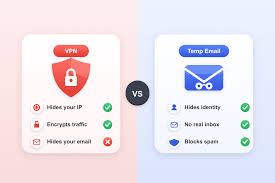
A Virtual Private Network (VPN) encrypts your internet connection and routes your traffic through a remote server, masking your real IP address and location. It protects:
- Your network traffic — what you browse, download, or stream.
- Your IP address — hiding your approximate physical location from websites.
- Public Wi-Fi security — preventing others on the same network from intercepting your data.
A VPN is essentially a privacy layer for how you connect to the internet.
What a Temporary Email Actually Does
A temporary (disposable) email address is a short-lived inbox you use instead of your real email when signing up for something. It protects:
- Your identity in signup forms — no personal information is tied to the address.
- Your primary inbox — keeping it free of spam and marketing emails.
- Your data in the event of a breach — if the service is hacked, no permanent email of yours is exposed.
A temporary email is a privacy layer for what you share when creating accounts.
Key Differences at a Glance
| Aspect | VPN | Temporary Email |
|---|---|---|
| Protects | Network traffic & IP address | Identity in signup forms |
| Use case | Browsing, streaming, public Wi-Fi | One-time account signups |
| Duration | Active during your session | Short-lived or single-use |
| Requires setup | Yes (app or config) | No (instant, no registration) |
| Solves spam | No | Yes |
| Hides location | Yes | No |
Do You Need Both?
Yes — because they solve different problems. Consider this scenario: you're on public Wi-Fi at a coffee shop, and you want to sign up for a newsletter to read a gated article.
- Without a VPN, anyone on that network could potentially intercept your traffic.
- Without a temporary email, that newsletter now has your real email forever, and you'll likely receive promotional messages indefinitely.
Using both together closes two separate gaps: one in your connection, one in your identity trail.
When One Is Enough
- Just browsing news or streaming? A VPN alone covers you.
- Just signing up for a one-time download with your own trusted network? A temporary email alone is sufficient.
- Doing both — public Wi-Fi and a new signup? Use both.
Common Misconception
Some people assume a VPN alone makes them "anonymous" online. It doesn't — a VPN hides where you're connecting from, but if you still type your real email and personal details into a signup form, that information is now directly linked to you, VPN or not.
Conclusion
A VPN and a temporary email address aren't competing tools — they're complementary. One protects your connection, the other protects your identity when creating accounts. Knowing which problem each one solves helps you build a privacy routine that actually covers the gaps that matter.